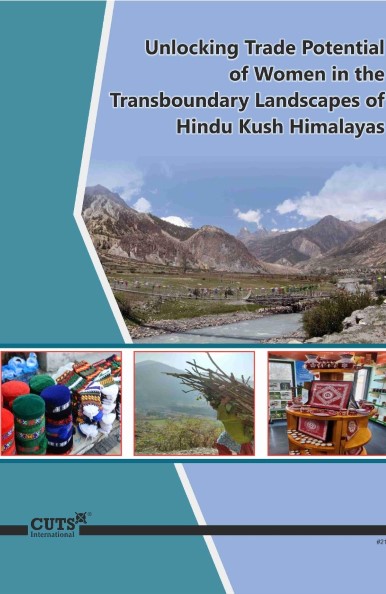
Unlocking Trade Potential of Women in the Transboundary Landscapes of Hindu Kush Himalayas
Overview
The Transboundary landscapes (TBLs) of the Hindu Kush Himalaya (HKH) shares ecological, cultural and socioeconomic characteristics across the transcending international borders of the member countries. People living in these fragile ecosystems mainly depend on farming, fishing, nature-based products, handicrafts, and tourism for their livelihoods. They are constantly exposed to disasters, calamities, and geopolitical tensions that enhance the vulnerability of marginalised people, particularly women. However, their involvement in trade is usually limited to the informal sector. Women’s workloads have heightened in the past without any equal increments in access to development, decision making, or land rights. The vulnerabilities of mountain women have been further aggravated due to COVID-19, which led to the closure of international borders, shutting down production units. A slash in the income has affected the business and the household expenses, which is of utmost importance.