Module-9: Assessing the Implications from Trade Liberalisation-Use of Different Methods and their Limitations
Qualitative analysis of a potential Free Trade Agreement between the European Union and India

Impact of Data Localisation on Digital Services Exports from Bangladesh
A Time for Action (Un Temps pour Agir)
The country research reports of a two-year project ‘Strengthening Constituencies for Effective Competition Regimes in Select West African Countries (also referred to as 7Up4 project) that CUTS has implemented in seven countries of West Africa is published in two volumes. The English volume contains the
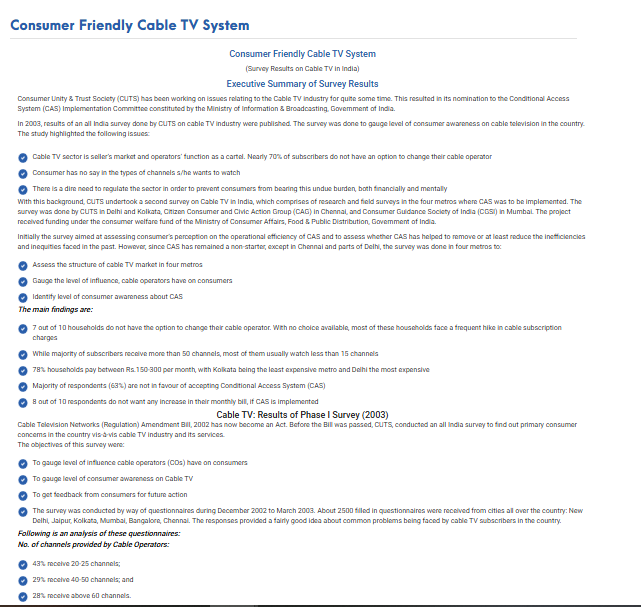
Consumer-friendly Cable TV System
This report comes in the backdrop of an all-India survey conducted by CUTS on cable TV industry which revealed that the cable TV sector in the country is a seller’s market and that the consumers are merely a puppet in the hands of operators having

Non-Tariff Measures to Food Trade in India A Case Study of Selected Ports
Combating Corruption in Rajasthan State, India, by Applying RTI Act as a Tool
Tobacco Control Campaign by Mobilising Key Stakeholder in Rajasthan State
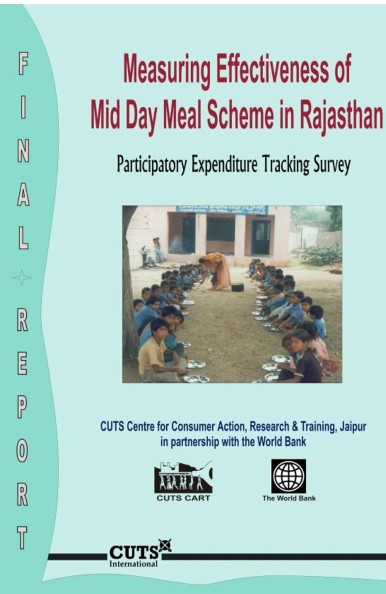
Measuring Effectiveness of Mid Day Meal Scheme in Rajasthan- Participatory Expenditure Tracking Survey (PETS)
Enhancing Trade and Regional Economic Integration between India and Bangladesh – Phase I
Consumer Assistance Cell for Electricity Consumer at Grassroots – Project Completion Reports
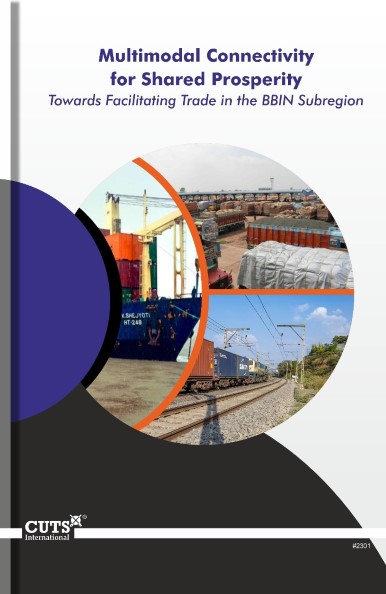
Multimodal Connectivity for Shared Prosperity: Towards Facilitating Trade in the BBIN Subregion
Consolidated report – Role of Women Journalists in Countering Misinformation and Disinformation in the Indo-Pacific Region
Identifying Emerging Green Jobs in Coal and Thermal Power Sector in the wake of Just Transition in the Eastern Part of India
White Paper on Improving India’s Competitiveness for Inclusive Economic Growth

Towards Effective Choice: A Nation-wide Survey of Indian TV Consumers
TV, a mass medium of video content consumption, has played a pivotal role in empowering its consumers with information, education and entertainment. A nation-wide survey of over 10,000 TV consumers conducted by CUTS International and Broadband India Forum (BIF), highlighted consumer concerns about the status quo and gathered insights
Exploring the Potential of Last Mile Transportation as an Enabler for Green Jobs
The study explores the potential of decarbonisation last-mile connectivity on the local economy and livelihood opportunities. This includes gender and skill inclusivity, reduced environmental pollution, and standard of living from a ‘just transition’ point of view. The overarching aim was to explore the connectivity practices in two Tier 1
Ease of Doing Digital Business: Study of Policy and Regulatory Challenges
Ease of Doing Business in India has been picking pace with the government-led and industrysought initiatives of decriminalisation, reducing compliance burdens, developing public infrastructure, removing regulatory uncertainty etc. This study takes a deep dive into these initiatives, among others, from the perspective of Ease of Doing
Synthesis Report – Economic Impact of Select Decisions of the Supreme Court and National Green Tribunal of India
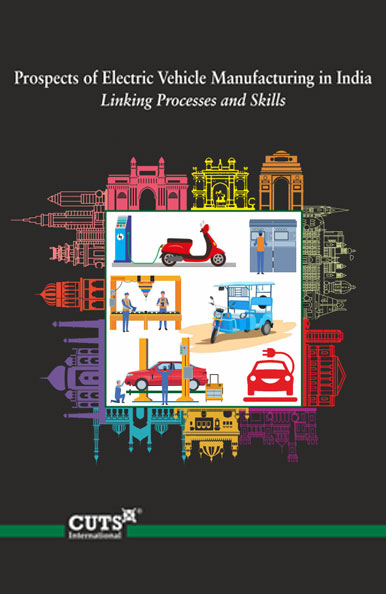
Prospects of Electric Vehicle Manufacturing in India: Linking Process and Skills



Sustainable Consumption and Production- A Consumer Perspective (Detailed Report)

Sustainable Consumption and Production: A Consumer Perspective — An Overview
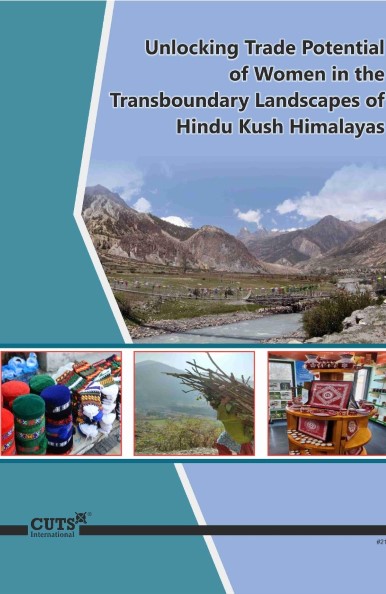
Unlocking Trade Potential of Women in the Transboundary Landscapes of Hindu Kush Himalayas
The Transboundary landscapes (TBLs) of the Hindu Kush Himalaya (HKH) shares ecological, cultural and socioeconomic characteristics across the transcending international borders of the member countries. People living in these fragile ecosystems mainly depend on farming, fishing, nature-based products, handicrafts, and tourism for their livelihoods. They
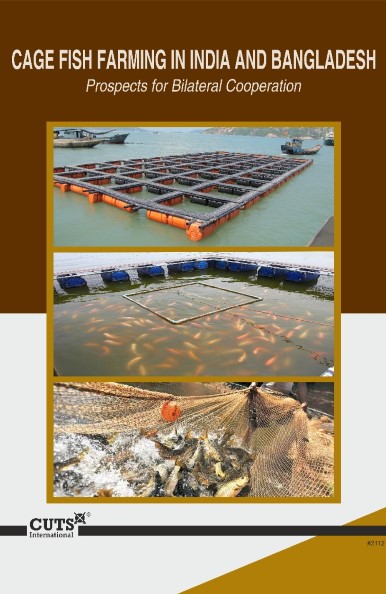
Cage Fish Farming in India and Bangladesh – Prospects for Bilateral Cooperation
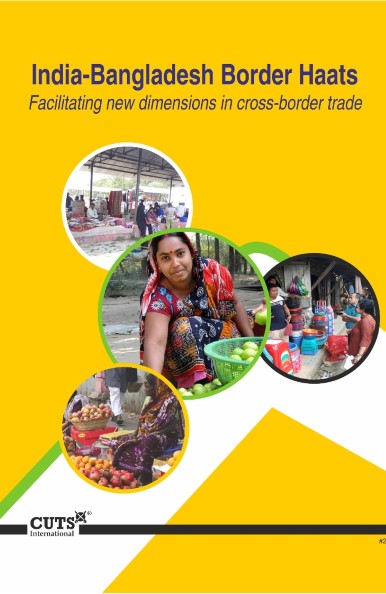
Indo Bangladesh Border Haats – Facilitating new dimensions in cross-border trade
Whitepaper on Regional Parliamentary Forum on Energy Cooperation & Energy Trade in South Asia

Strengthening the Discourse on Good and Better Jobs in India Textiles and Clothing Sector
The Indian economy is in a dichotomous phase where the share of private consumption in the GDP is at a phenomenal high of approximately 60 percent. However, the workforce which significantly contributes to the demand for private consumption largely remains characterised by low incomes and negligible social security. In
Impact of E-mobility Transitions on Jobs: A case study of Jaipur, Rajasthan
Data Localisation: India’s Double-Edged Sword?
The role and significance of data have evolved over the years for industries and countries alike.The advent of ever-changing technologies, has transformed businesses operations, processes, contribution to global data value chains and participation in international trade. This report is an enlightening resource in informing the discussion about the impact of



Bridging the East Trade and Transport Connectivity in the Bay of Bengal Region
Promoting Trade and Tourism in Transboundary Waterways of Meghna Basin

Sojourns in the Sundarbans – An Exploratory Study of Community-based River Tourism between India and Bangladesh

India-Bangladesh Agriculture Trade – Demystifying Non-Tariff Barriers to India-Bangladesh Trade in Agricultural Products and their Linkages with Food Security and Livelihood
Potential for Creating Cross-Border Value Chain in Select Horticulture Products and Spices between North East India and Bangladesh using Inland Water Transport
Bordering on Happiness- “An Assessment of Socio – Economic Impacts of Bangladesh-India Border Haats”
Economic Impact Analysis of Supreme Court Judgement Prohibiting Sale of Alcohol on Highways

Impact of CBET on livelihoods and Gender in Nepal and Bhutan
The study recommended that to facilitate Cross-Border Electricity Trade (CBET) in the region, governments should promote bilateral/regional agreements and treaties which promote equitable benefits. Moreover, such treaties must safeguard political interest not just at the national or regional level but also at the local level. Such policies backed

Standards Development and the 5G Opportunity: Mapping the way forward for India’s telecommunication industry
Many implementers and manufacturers in India have advocated for the need to regulate licencing of the underlying patented technology of the standard, which takes the form of Standard Essential Patents (SEPs). The primary concern is that after the standard has been set through the collaborative process, licencing of

Linkages and Impacts of Cross-border Informal Trade in Agricultural Inputs in Eastern South Asia
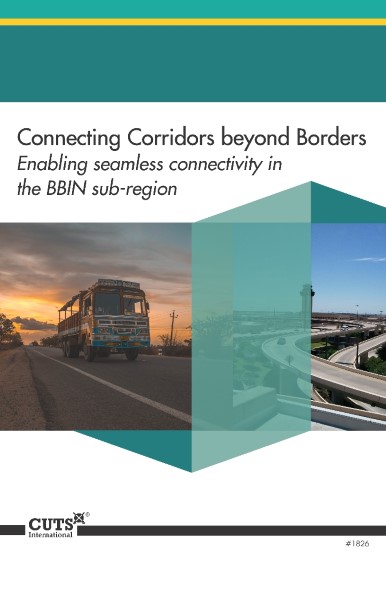
Connecting Corridors beyond Borders Enabling seamless connectivity in the BBIN sub-region

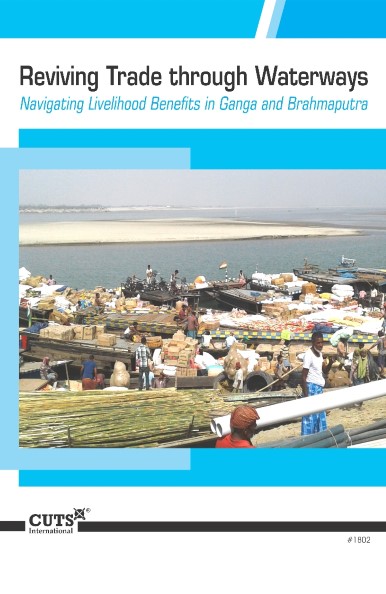
Reviving Trade through Waterways – Navigating Livelihood Benefits in Ganga and Brahmaputra
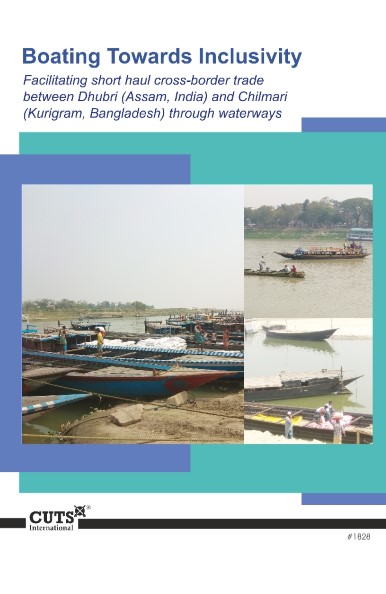
Boating Towards Inclusivity – Facilitating short haul cross-border trade between Dhubri (Assam, India) and Chilmari (Kurigram, Bangladesh) through waterways
Connecting Corridors beyond Borders – Enabling seamless connectivity in the BBIN sub-region
Cross-Border Value Chain in North East India: Prospects and The Way Forward

Exploring the Anticompetitive Practices in Fertiliser Transportation in Ghana
This report was undertaken with the aim of exploring possible causes of high prices of subsidised fertilisers in the country. The study was carried out with the sole aim to investigate if any anticompetitive practices are prevailing at the porthandling and inland transportation of fertilisers as well as

Benefits of the TIR Convention for the implementation of the BBIN Motor Vehicles Agreement
Developing regulatory interventions to address regulatory and competition bottlenecks in growth of payments banks
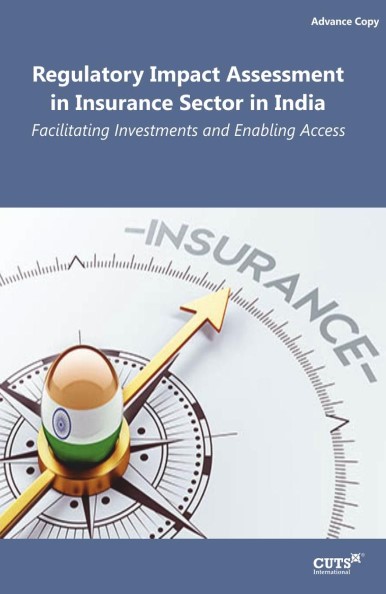
RIA in Insurance Sector in India in facilitating investments and enabling access
This study undertook Regulatory Impact Assessment (RIA) on few of the critical issues in the insurance sector including investments in the sector, expenditures by insurance companies and lastly retention of customers which has been a major challenge. The regulatory architecture of a nation also plays a major role

Pursuing Competition and Regulatory Reforms for Achieving Sustainable Development Goals
In September 2015, countries adopted the 2030 Agenda for Sustainable Development along with a set of 17 ëgoalsí referred to as Sustainable Development Goals (SDGs) to end poverty, protect the planet, and ensure prosperity for all. World leaders agreed to develop structured national action plans to achieve these

Zambia Public Procurement Toolkit
Public procurement refers to the purchase by governments and state-owned enterprises (SoEs) of goods, services and works. Public procurement is estimated to account for between 10 and 15 percent of gross domestic product (GDP) and is one of the biggest areas of spending by a government. In Zambia,
Leveraging Regional Policy Successes to Improve Interventions by the FRA and the Performance of Maize Markets in Zambia
The goal of this paper was to undertake case review of national strategic grain reserve institutions in the sub-Saharan Africa (SSA) region to provide evidence-based practices of good policy interventions that have been undertaken with minimum market distortionary effects on maize (staple food) markets. Specifically, it aimed to conduct
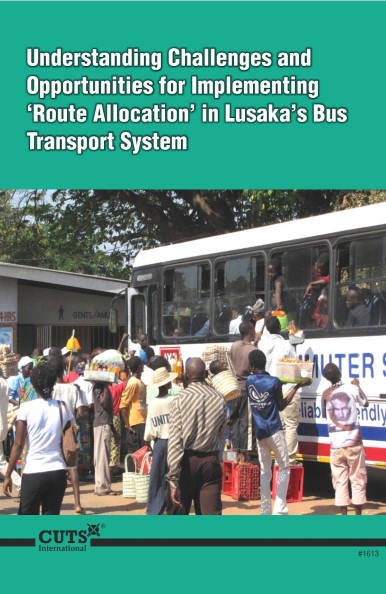
Understanding Challenges and Opportunities for Implementing ‘Route Allocation’ in Lusaka’s Bus Transport System
The report provides an analysis of the current urban public transport system focussing on intra-city transport in Zambia, Lusaka in particular. The report uses some of the data from the Competition Reforms in Key Markets for Enhancing Social and Economic Welfare (CREW) project to describe the status quo

Liberalisation of Maize Procurement in Ghana & Implications on Women Economic Empowerment
Ghanaís domestic maize trade is largely dependent on a network of private women traders who dominate the local and regional markets while larger groups of wholesalers engage in spatial arbitrage across regions/districts. These women traders are referred to as ëMarket Queensí (MQs). The study presents analysis of liberalisation
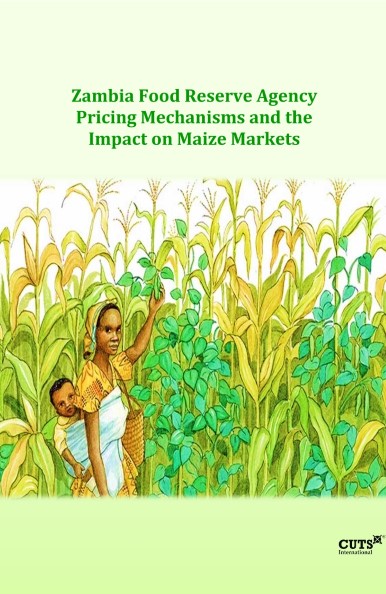
Zambia Food Reserve Agency Pricing Mechanisms and the Impact on Maize Markets
This report investigates and provides an understanding of Food Reserve Agencyís (FRA) pricing mechanisms in the maize market in Zambia by assessing FRAís rationale for setting the maize floor price; the price determination process; and the floor price effect in maize markets in the country. Analysis reveal that

Impact of Current Market Dynamics on Paddy and Wheat Farmers in Muzaffarpur, Bihar
This report attempts to study the implications of recent agricultural reforms on small and marginal farmers and relevant stakeholders in a specific location in Bihar (Muzaffarpur district), as per the advice of local experts. The report attempts to extract certain measures that can help farmers increase their income

Assessment of Bangladesh-India Trade Potentioality Need for Cross-Border Transposrt Facilitation & Mutual Recognition of Standards

Competition and Regulation in India, 2015 – Leveraging Economic Growth Through Better Regulation
The India Competition and Regulation Report (ICRR 2015) is a compendium of policy research on the status of competition and regulation in India spanning across sectoral and institutional dimensions. This volume is fifth in the series of biennial reports, since 2007. The fifth ICRR Report is timely as
Mega Regional Trade Agreements and the Indian Economy: An Analysis of Potential Challenges and Opportunities
Competition and Regulation in India, 2013 – Leveraging Economic Growth Through Better Regulation
This is fourth and latest report in the series of biennial reports that cover the state of competition and regulation in select economic and social sectors in India. This report focusses on private sector-led finance and healthcare, and the public sectorled railways and coal sectors, in addition to dealing with the
Rice Seeds: A Study of Availability and Accessibility in Bangladesh and India
India-Bangladesh Trade Potentiality – An Assessment of Trade Facilitation Issues
India-Bangladesh Trade Potentiality An Assessment of Trade Facilitation Issues

Policy distortions hurt competition and growth in India – A CUTS Research Report
The CUTS research paper brings to light numerous instances of competition distortions induced by government policies in India with a view to devise a framework that would assess the policies on the touchstone of their impact on competition and take steps to minimise their anti-competitive
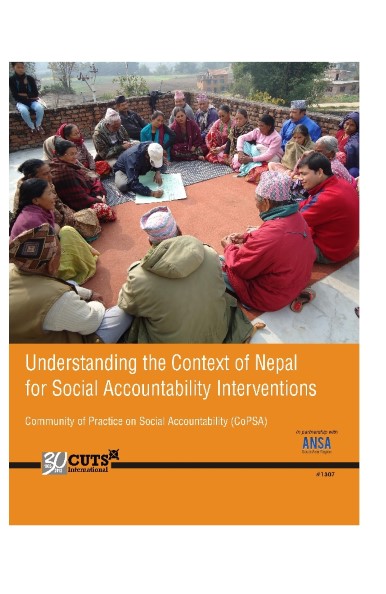
Understanding the Context of Nepal for Social Accountability Interventions
Making trade a tool for poverty amelioration in the 21st Century A report based on perceptions of global trade and development experts
Reflections from the Frontline: Developing Country Negotiators in the WTO
Did we make any difference? Reforming Competition Law Regimes in the Developing World through the 7Up Programme
This report is an assessment of ‘7Up projects’ on competition law and policy issues undertaken in developing countries of Asia and Africa by CUTS over the period 2000-2010 aimed at empowering national stakeholders to stimulate the process of national competition reforms. Altogether 7Up projects have
Trade, Competition, and the Pricing of Commodities
After several decades of quiescence, global commodity prices almost doubled in 2008 and, after a brief fall, rose again in 2011. Over the longer term, the impact of population growth on demand, and of climate change on supply, makes it likely that commodity prices will
Understanding the State of Domestic Competition and Consumer Policies in Select MENA Countries
In order to develop a deeper idea (and a subsequent initiative on competition and consumer protection issues) CUTS undertook a needs assessment mission in seven countries of the Middle East and North Africa (MENA) region (namely Algeria, Egypt, Morocco, Tunisia, Jordan, Lebanon and Syria). The

Consumers and Economic Cooperation: Cost of Economic Non-cooperation to Consumers in South Asia

Evolution of Competition Laws and their Enforcement: A Political Economy Perspective
The book covers case studies of nine countries of differing sizes and at varying stages of economic development that have at one stage or another repealed extant competition laws for new ones, and seeks to examine the motivations and contexts under which this was done.

Unholy Alliances in Healthcare Services
A number of state governments claim to be providing medicines for free to consumers getting treated in public healthcare institutions. So, why is it that they still have to buy drugs from private sources? CUTS has endeavoured to find answers to this in the project

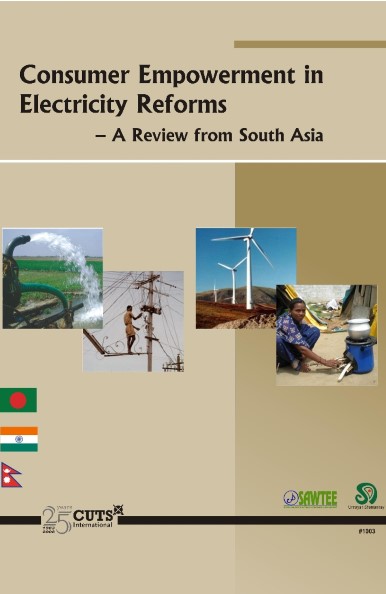
Consumer Empowerment in Electricity Reforms – A Review from South Asia
The report reviews the status of consumer participation in the regulatory reform process in the project countries. It concludes that most of the consumers are not satisfied with the existing complaint redressal mechanism as well as the quality of service available to them. Moreover, there

Comparative Study of Regulatory Framework in Infrastructure Sector – Lessons for India
For the Indian economy to achieve and sustain a high growth rate, creation of quality infrastructure is critical. It is estimated that India needs more than a trillion dollars of investment in infrastructure. This Report focuses on how such a regime can be developed by

Unfair Trade Practices and Institutional Challenges in India – An Analysis
Why Should Consumers be Interested in a Competition Law & Policy?
Competition is a process of economic rivalry between market players to attract customers. Fair competition benefits consumers and the economy. This paper aims at generating awareness that could be helpful for a common person to identify anti-competitive practices in the market place and seek action
Reassessing Scope and Mandate of the Enhanced Integrated Framework (EIF)
Agricultural Export Restrictions: Welfare Implications and Trade Disciplines
Politics Triumphs Economics? Political Economy and the Implementation of Competition Law and Regulation in Developing Countries (Volume II)
This volume, second in the series, published under the ‘Competition, Regulation and Development Research Forum’ (CDRF) project is compilation of nine papers which were presented at the symposium marking the culmination of the research efforts of the 1st research cycle of CDRF. The research papers

Competition and Regulation in India, 2009 Leveraging Economic Growth Through Better Regulation
This volume, second in the series published under the project, “India Competition and Regulation Report – ICRR project”, explores issues relating to sector regulation pertaining to power, ports, higher education, agricultural markets and civil aviation besides dealing with the issue of ‘quality of regulation’. The
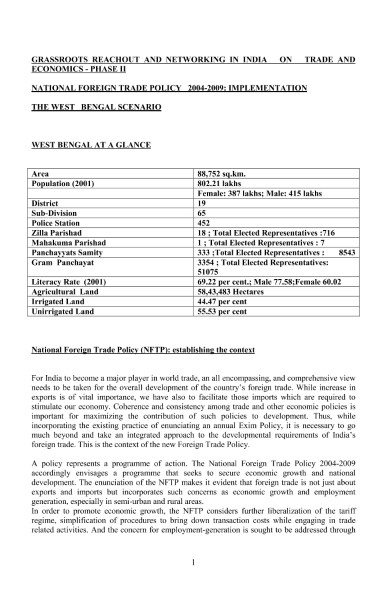
NATIONAL FOREIGN TRADE POLICY 2004-2009: IMPLEMENTATION A Reports of the West Bengal Scenario
Domestic Preparedness for Services Trade Liberalisation Are South Asian Countries Prepared For Further Liberalisation?
Training Needs for Commercial and Economic Diplomacy: An Indian Case Study
Regional Trade Openness Index, Income Disparity and Poverty – An Experiment with Indian Data
A Critical Look at Economic Governance in India: The Case of National Foreign Trade Policy
Mainstreaming Development in the WTO Developing Countries in the Doha Round
South Asian Positions in the WTO Doha Round In Search of A True Development Agenda Volume – 2
Experience with Trade Liberalisation from Select Developing Countries
Competition and Regulation in India, 2007
The research volume has been published under project, “India Competition and Regulation Report – ICRR project”. The report takes stock of the progress on the competition scenario in India and offers an insight on where we are and where we need to go. As part
Rajasthan Mein Upbhoktaon Ki Stithi (State of Consumers in Rajasthan)
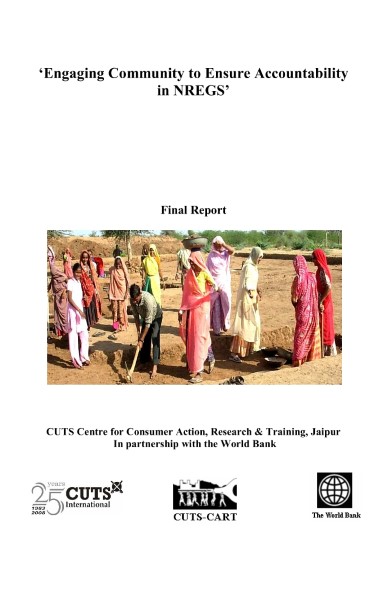
Rajasthan, India: A Citizen’s Assessment of the Implementation of the National Rural Employment Guarantee Scheme (NREGS)
Demystifying agriculture market access formula – A developing country perspective after the Cancun setback
Liberalising Trade in Environmental Goods and Services – In Search of ‘Win-Win-Win’ Outcomes
Dealing with protectionist standard setting – Effectiveness of WTO agreements on TBT & SPS

Competitiveness of service sectors in South Asia – Role and Implications of GATS
Negotiating the TRIPs Agreement – India’s Experience and some Domestic Policy Issues
Filters