A Time for Action (Un Temps pour Agir)
The country research reports of a two-year project ‘Strengthening Constituencies for Effective Competition Regimes in Select West African Countries (also referred to as 7Up4 project) that CUTS has implemented in seven countries of West Africa is published in two volumes. The English volume contains the

Standards Development and the 5G Opportunity: Mapping the way forward for India’s telecommunication industry
Many implementers and manufacturers in India have advocated for the need to regulate licencing of the underlying patented technology of the standard, which takes the form of Standard Essential Patents (SEPs). The primary concern is that after the standard has been set through the collaborative process, licencing of

Exploring the Anticompetitive Practices in Fertiliser Transportation in Ghana
This report was undertaken with the aim of exploring possible causes of high prices of subsidised fertilisers in the country. The study was carried out with the sole aim to investigate if any anticompetitive practices are prevailing at the porthandling and inland transportation of fertilisers as well as
Pursuing Competition and Regulatory Reforms for Achieving Sustainable Development Goals
In September 2015, countries adopted the 2030 Agenda for Sustainable Development along with a set of 17 ëgoalsí referred to as Sustainable Development Goals (SDGs) to end poverty, protect the planet, and ensure prosperity for all. World leaders agreed to develop structured national action plans to achieve these

Zambia Public Procurement Toolkit
Public procurement refers to the purchase by governments and state-owned enterprises (SoEs) of goods, services and works. Public procurement is estimated to account for between 10 and 15 percent of gross domestic product (GDP) and is one of the biggest areas of spending by a government. In Zambia,
Leveraging Regional Policy Successes to Improve Interventions by the FRA and the Performance of Maize Markets in Zambia
The goal of this paper was to undertake case review of national strategic grain reserve institutions in the sub-Saharan Africa (SSA) region to provide evidence-based practices of good policy interventions that have been undertaken with minimum market distortionary effects on maize (staple food) markets. Specifically, it aimed to conduct
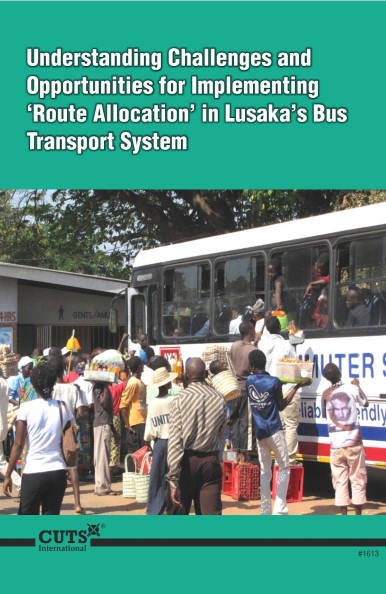
Understanding Challenges and Opportunities for Implementing ‘Route Allocation’ in Lusaka’s Bus Transport System
The report provides an analysis of the current urban public transport system focussing on intra-city transport in Zambia, Lusaka in particular. The report uses some of the data from the Competition Reforms in Key Markets for Enhancing Social and Economic Welfare (CREW) project to describe the status quo

Liberalisation of Maize Procurement in Ghana & Implications on Women Economic Empowerment
Ghanaís domestic maize trade is largely dependent on a network of private women traders who dominate the local and regional markets while larger groups of wholesalers engage in spatial arbitrage across regions/districts. These women traders are referred to as ëMarket Queensí (MQs). The study presents analysis of liberalisation

Zambia Food Reserve Agency Pricing Mechanisms and the Impact on Maize Markets
This report investigates and provides an understanding of Food Reserve Agencyís (FRA) pricing mechanisms in the maize market in Zambia by assessing FRAís rationale for setting the maize floor price; the price determination process; and the floor price effect in maize markets in the country. Analysis reveal that

Impact of Current Market Dynamics on Paddy and Wheat Farmers in Muzaffarpur, Bihar
This report attempts to study the implications of recent agricultural reforms on small and marginal farmers and relevant stakeholders in a specific location in Bihar (Muzaffarpur district), as per the advice of local experts. The report attempts to extract certain measures that can help farmers increase their income
Competition and Regulation in India, 2015 – Leveraging Economic Growth Through Better Regulation
The India Competition and Regulation Report (ICRR 2015) is a compendium of policy research on the status of competition and regulation in India spanning across sectoral and institutional dimensions. This volume is fifth in the series of biennial reports, since 2007. The fifth ICRR Report is timely as
Competition and Regulation in India, 2013 – Leveraging Economic Growth Through Better Regulation
This is fourth and latest report in the series of biennial reports that cover the state of competition and regulation in select economic and social sectors in India. This report focusses on private sector-led finance and healthcare, and the public sectorled railways and coal sectors, in addition to dealing with the

Policy distortions hurt competition and growth in India – A CUTS Research Report
The CUTS research paper brings to light numerous instances of competition distortions induced by government policies in India with a view to devise a framework that would assess the policies on the touchstone of their impact on competition and take steps to minimise their anti-competitive
Did we make any difference? Reforming Competition Law Regimes in the Developing World through the 7Up Programme
This report is an assessment of ‘7Up projects’ on competition law and policy issues undertaken in developing countries of Asia and Africa by CUTS over the period 2000-2010 aimed at empowering national stakeholders to stimulate the process of national competition reforms. Altogether 7Up projects have
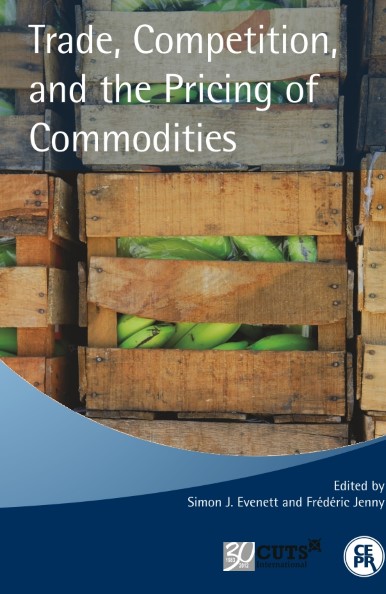
Trade, Competition, and the Pricing of Commodities
After several decades of quiescence, global commodity prices almost doubled in 2008 and, after a brief fall, rose again in 2011. Over the longer term, the impact of population growth on demand, and of climate change on supply, makes it likely that commodity prices will
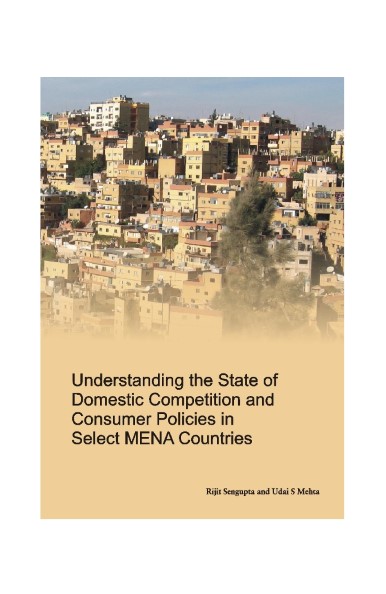
Understanding the State of Domestic Competition and Consumer Policies in Select MENA Countries
In order to develop a deeper idea (and a subsequent initiative on competition and consumer protection issues) CUTS undertook a needs assessment mission in seven countries of the Middle East and North Africa (MENA) region (namely Algeria, Egypt, Morocco, Tunisia, Jordan, Lebanon and Syria). The
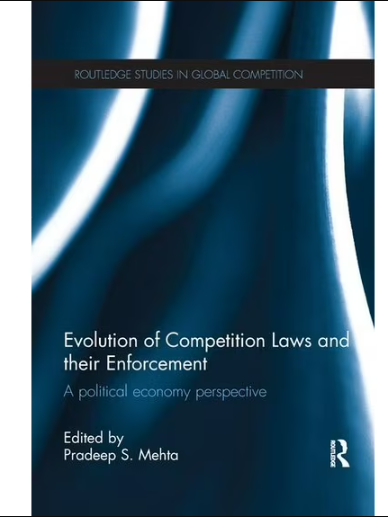
Evolution of Competition Laws and their Enforcement: A Political Economy Perspective
The book covers case studies of nine countries of differing sizes and at varying stages of economic development that have at one stage or another repealed extant competition laws for new ones, and seeks to examine the motivations and contexts under which this was done.
Unholy Alliances in Healthcare Services
A number of state governments claim to be providing medicines for free to consumers getting treated in public healthcare institutions. So, why is it that they still have to buy drugs from private sources? CUTS has endeavoured to find answers to this in the project
Why Should Consumers be Interested in a Competition Law & Policy?
Competition is a process of economic rivalry between market players to attract customers. Fair competition benefits consumers and the economy. This paper aims at generating awareness that could be helpful for a common person to identify anti-competitive practices in the market place and seek action
Filters